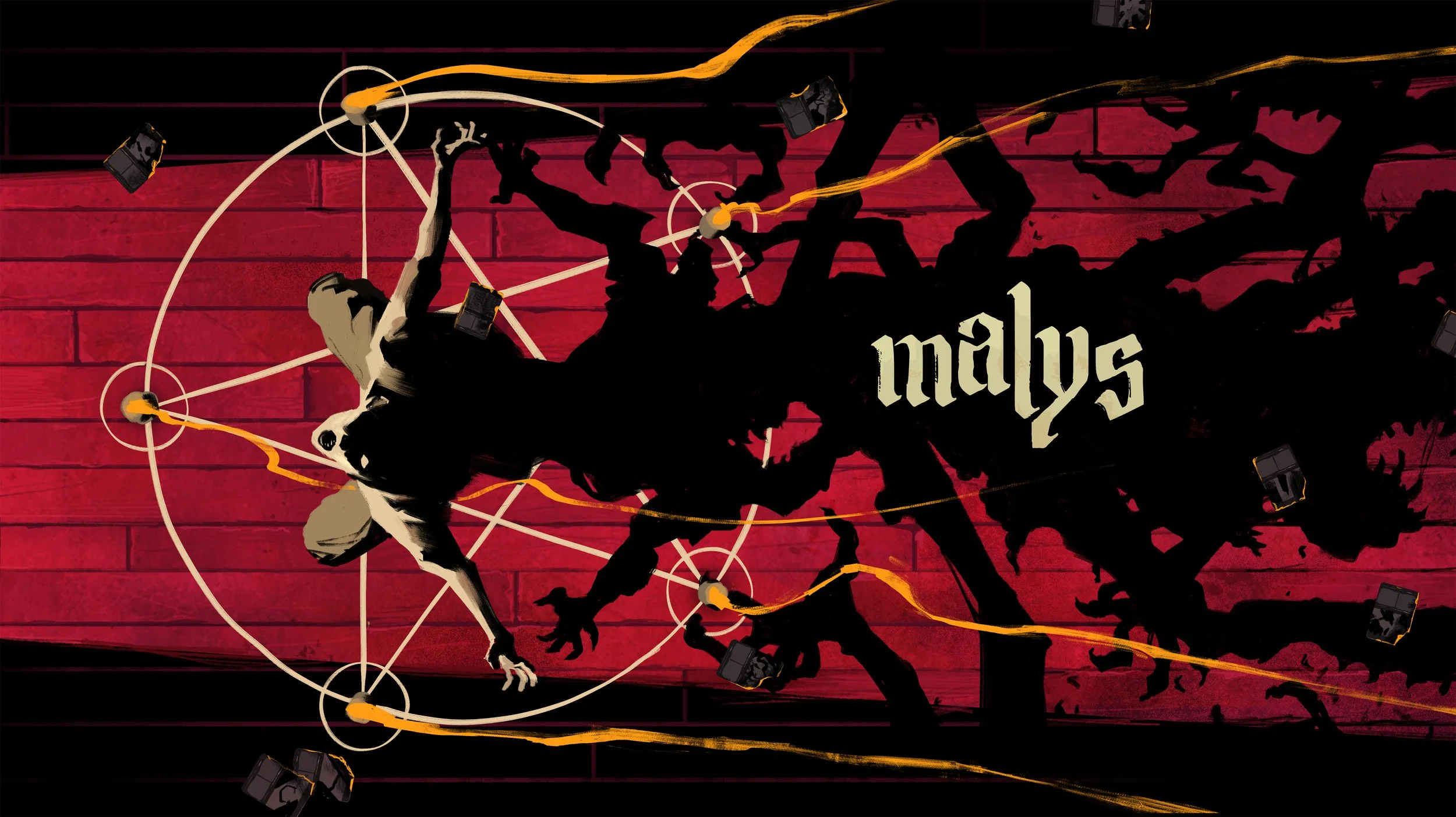
Malys
Tech Art Coordinator
Developer: Summerfall Studios
Publisher: Summerfall Studios
Platforms: PC
Released: October 2025
Malys is a roguelite deckbuilder from creative director David Gaider and the team at Summerfall Studios. Using evocative imagery, unique storytelling and innovative mechanics, it stands apart from other games in the genre.
Developed by a relatively small team, within a tight time frame, Malys is my favourite project that I’ve worked on and I’m extremely proud to have been a part of it. The project went from conception, to pre-production, to an Early Access launch, to a full release in a little over a year, and is a testament to the hard work and creativity of Summerfall Studios.
For this project I took on a new role of Tech Art Coordinator, which allowed me to explore other skillsets and responsibilities in addition to creating tech art and VFX alone. My contributions to Malys include the following:
Establishment of art and VFX pipelines for incorporating demons, hosts, story characters, background environments and more
Creation and implementation of over 100 unique visual effects under the direction of the Art and Creative Directors. These included creating materials, particle systems, flipbook animations, post processing effects, etc. as well as iteration and implementation with gameplay systems
Production assistance that included taking on responsibility for project decision tracking, assistance with managing our risk register regularly, occasionally running Agile meetings such as standup, sprint planning and retro
Assisting the project lead with task prioritization and planning, raising and addressing team risks and issues and helping the project ship on time and on budget under tight time constraints
UI development support including setting up features much-requested by users during early access, such as an in-game codex and accessibility options (large tooltip sizing, large text size on cards and in storylets, cinematic subtitles and more)
Assisting the engineering team in areas such as developing systems to communicate game logic to the player through our demon intent system (helping the player make decisions based on upcoming demon actions)
Testing, bug reporting, prioritization and fixing in association with the producer and the engineering and UI teams
Optimisation of art assets to keep the game within memory and performance budgets
Software used
Unreal Engine 5
EmberGen
Procreate
Visual Studio
Project examples
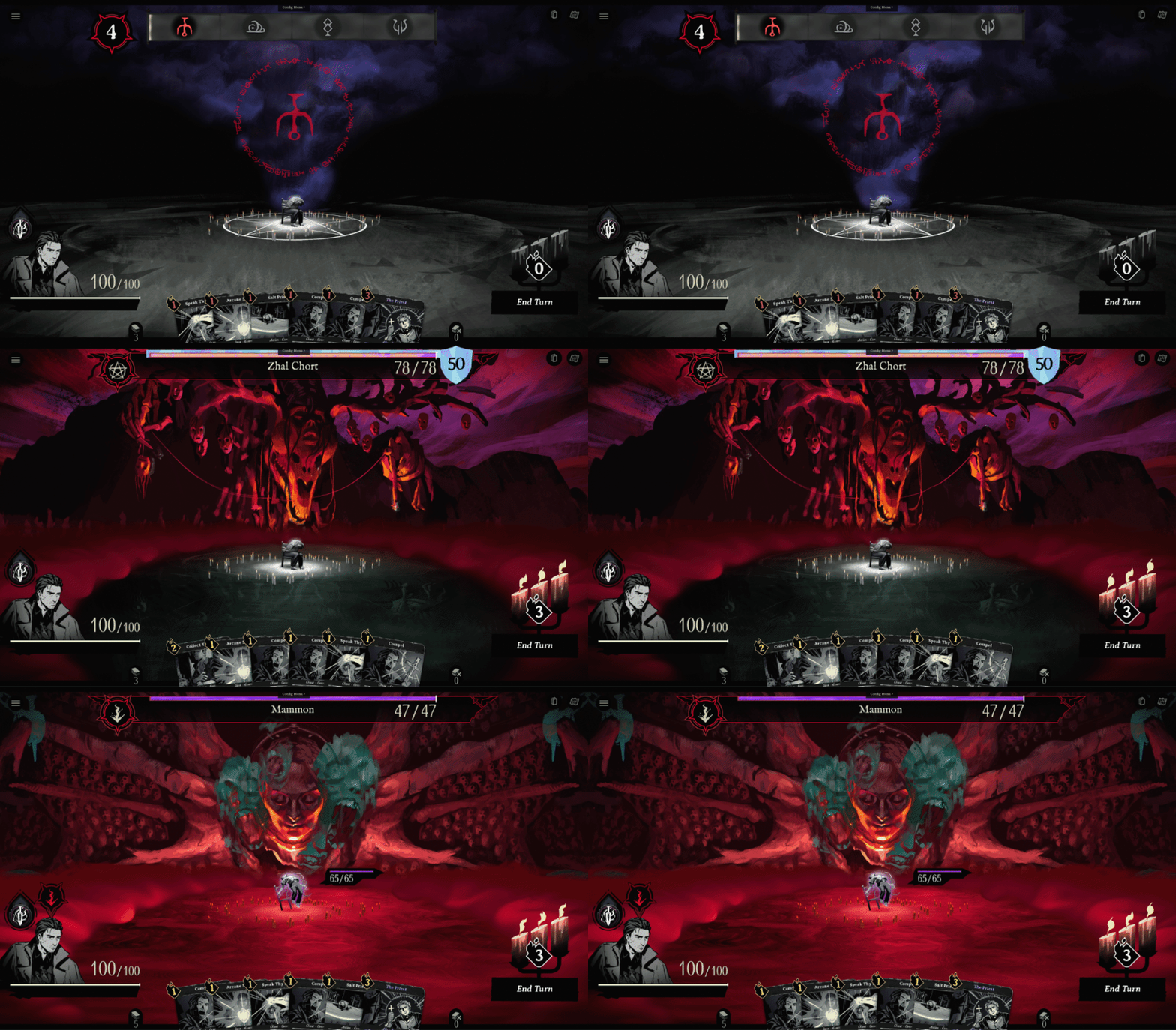
Exorcism demon and environment VFX
In Malys, the majority of gameplay occurs within Exorcisms, many of which take place across three visually distinct phases: Expose, Endure and Expel. Much iteration took place on defining the look and feel of the environments and how we portray the demons themselves.
Many different elements were created to make the environment and the demons visually interesting and unique, without being overwhelming or distracting to gameplay. Smokey effects like the purple smoke that obscures the demon in Expose and the roiling smoke ring around the host in Endure were created using simulations inside EmberGen and then stylized with a combination of seamless textures and colour curves.
The demons receive a slight heat haze effect and some faked under-lighting to give them presence, and other elements like flickering candles around the host and a stylized panning sky all contribute to bring the world of Malys to life.
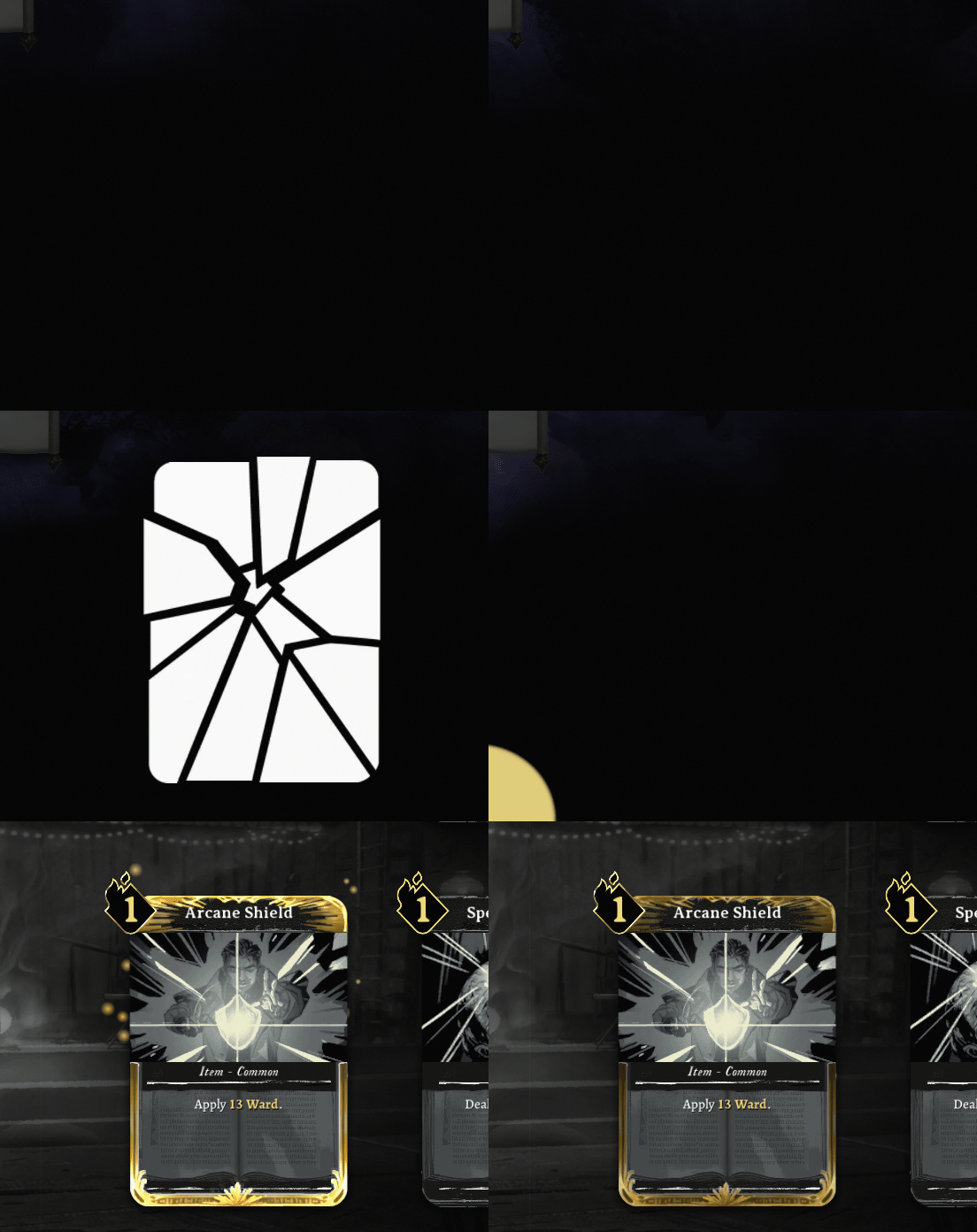
Card effects
Cards are at the core of a deckbuilder, and card effects needed to be created that communicate to the player at a glance what is happening in the game. Various gameplay mechanics like burning cards to gain power, to cards that are removed from the rest of the encounter once they’re played, to upgrading cards, all need unique and eye catching effects.
Timing and how strong or subtle various effects are was iterated on over the course of development as we spent more time playing the game and seeing the effects in context. Some needed to be much snappier to not feel like they slowed the game down if mechanics had to wait for VFX to finish, whereas some needed to dwell for longer to make them clearer and more obvious to the player.
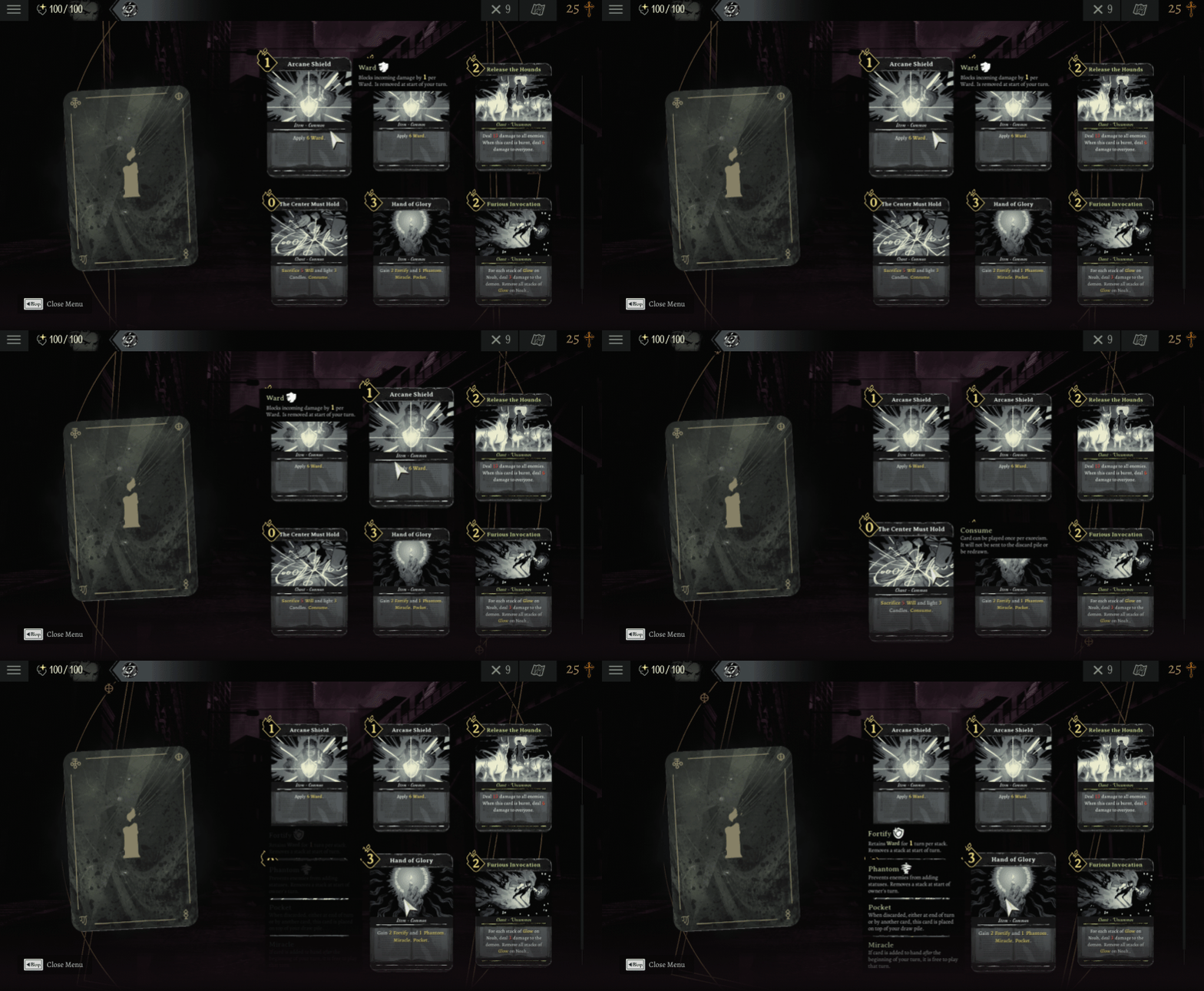
Tooltips
Being an extremely UI heavy game type, I was able to further develop some skills in this area of the project, including helping out with our tooltip system. We found tooltips to be crucially important as a way to help communicate game mechanics, systems and keywords to players, without always having too much text on screen permanently.
Two of the aspects to implementing tooltips I was involved with was handling tooltip positioning and increased tooltip sizing as an accessibility option for players. This involved logic to manage where tooltips appear on screen in a way that behaves whether they are regular or large size, and preventing them from being able to partially appear off-screen.
For example, tooltips for cards generally appear to the right of card they are for, but in the card deck view, cards that are too far to the right on screen could have tooltips being visually cut off, so these need to appear to the left of the card so they are still readable.
End-game spoilers below!
End game exorcism VFX
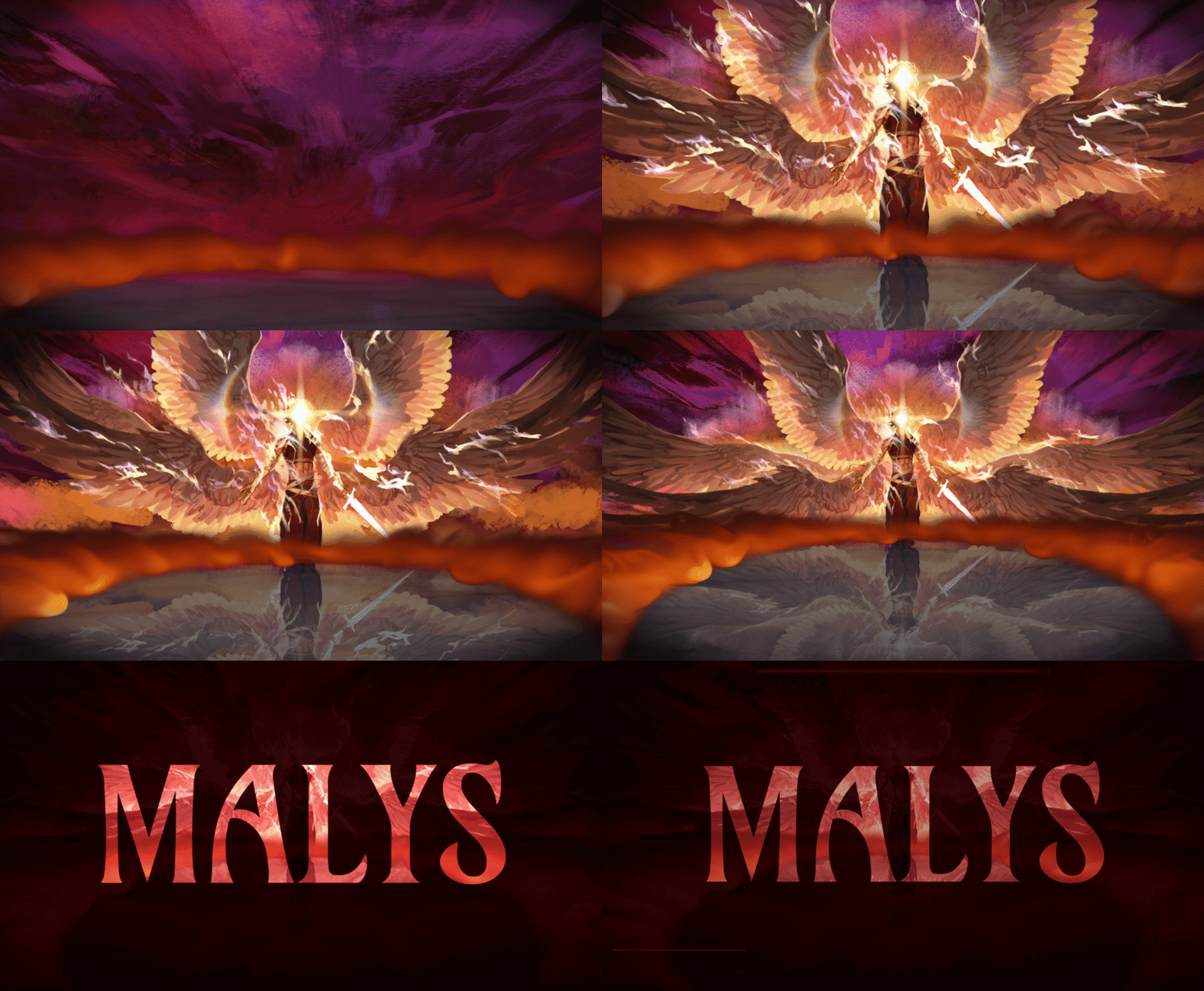
We knew going into this project that there would be limited scope for unique visual effects for each demon that you could encounter in the game. However, for end-game, unique boss fights, we definitely wanted to make sure we included some bespoke VFX to make these exorcisms feel different and special.
For the Malys boss fight, I took the incredible artwork created by our art director Benjamin Ee and separated the elements into a group of textures that could be manipulated individually. In particular, the wings have animations applied to them that are played when various demon actions occur. These animations are created purely through UV manipulation in the material, so they are very efficient and didn’t need a whole separate 2D rigging pipeline to be used for only one or two exorcisms. In addition, an assortment of unique versions of VFX such as when the demon attacks were also created, and some different environment colour schemes fitting a unique final boss.
On a longer project it would’ve been great to create unique effects like these for each demon to give each of them more flavour, but creating these for the final encounter was really fun and satisfying.